The Wall Test: 12MP vs. 48MP Phone Files, Three Print Sizes, and a Panel That Kept Guessing
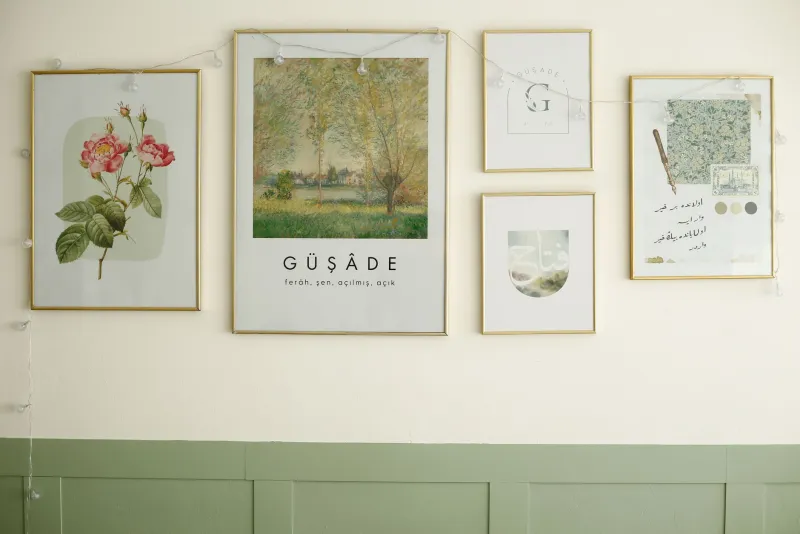
Every phone sold in the US right now has a big number on the box, and every forum thread about it ends the same way: somebody insists you can see the difference, somebody else says it's marketing, and nobody has actually printed anything. So I printed things. Eighteen of them, at three sizes, hung in two rooms with decent daylight and one truly mediocre ceiling fan light.
The setup: three scenes, two file sizes, one lab order
I picked scenes that people actually photograph. A kitchen counter in mixed window-and-tungsten light, because that is where half of real life happens. A bare maple against a bright November sky, because foliage and branches are the classic detail torture test. And a downtown storefront with hand-painted lettering on the glass, because text is the thing your eye catches first and forgives last.
Everything was shot on a tripod with a two-second delay. Two current flagships, one from Apple and one from Google, each in its default 12MP mode and then in its maximum-resolution mode (48MP on one, 50MP on the other). I kept the raws and applied one identical baseline edit to every file, because the point was to test resolution, not my taste in contrast curves. Nothing was sharpened past the default output.
The lab was a standard consumer print house, luster paper, no auto-correction, no "enhance" box checked. Eighteen unique prints, plus duplicates shuffled in so the panel saw each pair twice and never in the same order. Nobody knew which print was which. I didn't tell them what sizes they were looking at either, which lasted about four minutes.
8x10 is a rigged game, in a good way
Here is the math that kills most of this argument before it starts. A 12MP file is roughly 4032 pixels wide. Print it 8 inches across and you're at something like 500 pixels per inch. Your lab's printer probably tops out around 300. You could crop a third of the frame away and still be fine.
So it was not a surprise that the 8x10s were a coin flip. Nine panelists, three scenes, and the split came out 5-4 on two of the three scenes and dead even on the third. When I asked people to explain their picks, the reasons had nothing to do with detail. They picked the print that looked slightly warmer, or the one where the window reflection sat a hair lower because of the crop. At this size you are judging color and framing, full stop.
One practical note: a 4:3 phone file does not fit a 5:4 print without cropping. If you frame tight at capture, the 8x10 crop eats your edges. Give yourself room.
11x14: where the arguing started
This is the size where people leaned in. At 11x14, the 12MP file is still around 350 ppi, so technically it's still over the line. But you start to see the pipeline instead of the pixels. The high-res file held the maple twigs a little more cleanly against the sky, while the 12MP file turned the finest branches into a soft gray haze that some panelists described as "more natural" and others described as "mushy."
The storefront scene split the room clean. With the lettering, the 48MP print won seven of nine when people got within about ten inches. From three feet away, four of those seven switched to "no difference." That distance thing is the whole ballgame and nobody accounts for it when they're zooming to 400% on a monitor.
Odd result worth flagging: two non-photographers preferred the 12MP version of the foliage shot. Their reasoning was that it looked "cleaner." What they were seeing was noise reduction, which at high resolution has less to chew on and does less damage. Sharpness and pleasantness are not the same axis.
16x20: the only size where it showed, and only up close
Sixteen by twenty is a serious piece of paper. It's the size people hang over a couch, which means the normal viewing distance is four to six feet, which means you are looking at it from roughly the same angular size as an 8x10 held at arm's length. Physics does not care about your feelings or your sensor.
At wall distance, the panel picked the high-res print eleven times out of eighteen comparisons. Barely better than chance. Nose-to-print, that jumped to fifteen out of eighteen, and the wins were concentrated in the storefront text and the maple branches.
Meanwhile the 12MP print at 16x20 measured out to roughly 250 ppi after the 5:4 crop. Two hundred and fifty. That is a genuinely good print. The 300 ppi rule that gets repeated in every printing thread is a rule of thumb for reading distance, not a law of nature, and treating it as a law has talked a lot of people into buying gear they didn't need.
When high-res mode actually earns its slot
Four situations, based on actually looking at these prints:
- You're cropping hard. Cropping is just printing smaller and throwing the rest away. A 48MP file absorbs a 50% crop and still lands near 12MP of real pixels. This is the single strongest case for the mode.
- The subject is fine detail in good light. Foliage, hair, fabric texture, signage, architecture. Not skin at a birthday party.
- You're going past 16x20. If it's going on a gallery wall at 24x36, shoot the big file and don't think about it again.
- You're on a tripod in daylight. High-res modes want stability and light. Give them both and they behave.
And four situations where it's a waste of storage:
- Low light, where the pixel-binned 12MP result is usually cleaner and always faster.
- Anything moving. Shot-to-shot time in max-resolution mode is noticeably worse, and you will miss the moment while the phone writes the file.
- Bursts and kids and dogs.
- Any print 11x14 or smaller, which is most prints.
What I'd tell a friend at the counter
Shoot 12MP by default. Switch to the big file when you know you're cropping, or when the frame is full of small detail you care about, or when you're printing large. Then spend the money you saved on paper and a second pass at the lab, because a well-lit 12MP print beats a badly-lit 48MP print every single time, and the panel proved that to me three separate ways before lunch.
The megapixel number isn't a lie. It's just answering a question most of us aren't asking.